


What Is Voice Clone and Audio Search Technology?
The digital world is changing fast. For years, SEO experts focused only on typed words, website links, and keywords. Today, a new frontier is here: Voice Clone & Audio Search SEO.
AI is getting smarter, and users are stopping typing. Instead, they talk to their devices. People ask their phones for nearby food, talk to AI assistants, and listen to AI-generated audio. Voice is quickly becoming the main way people find information online.
AI voice cloning is no longer just a fun trick. It is a powerful business tool. New software can copy human voices perfectly. This lets brands make personalized messages, create audio in many languages, and run massive voice marketing campaigns.
At the same time, search engines can now understand spoken words, context, and what the user wants. Because of this, SEO experts cannot just write text anymore. To stay visible online, they must optimize for spoken questions and audio files.
Companies that jump on this trend early will win big. Smart marketers are already changing their plans. If you want people to find your business on the internet today, you need to understand voice tech.
What Is AI Voice Cloning?
AI voice cloning uses smart computer programs to copy how a person speaks. It learns their tone, pitch, and speed. These systems can create a realistic copy of a voice using just a very short audio clip of the real speaker.
Companies use this tech to create virtual speakers, translate content, and make unique customer experiences.
The market for this tech is growing fast:
- The global voice cloning market hit $2.5 billion in 2025.
- Experts predict huge growth over the next ten years.
- Sales are growing by more than 20% each year.
- Schools, hospitals, and media companies use it the most.
Brands use cloned voices to keep their sound the same across the internet. Imagine making thousands of personal audio messages without asking a real person to record each one. That is the power of voice cloning. For SEO, this tech helps you make lots of audio content that voice assistants can easily find.
How Audio Search Works
Audio search is different from regular voice search:
Voice Search: You talk to a device to look something up.
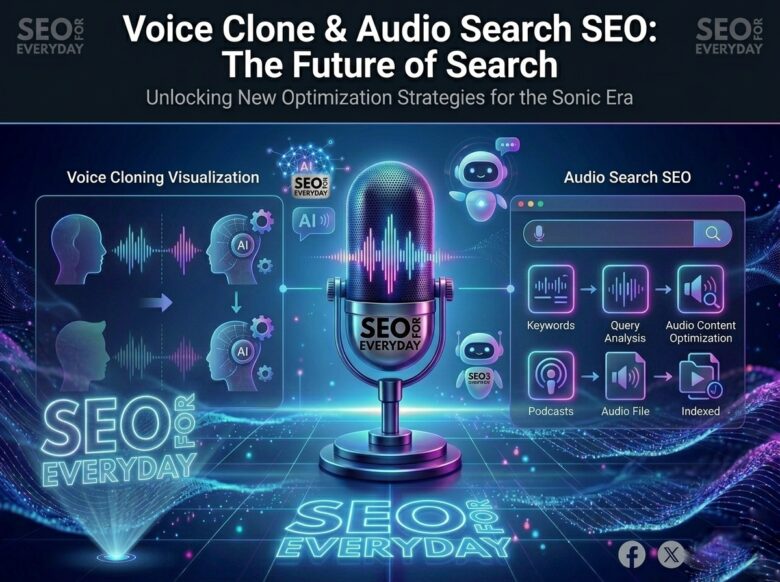
Audio Search: A search engine listens to, understands, and ranks information inside audio files like podcasts, interviews, and webinars.
Modern search engines use speech recognition and smart AI to listen to audio. Once the system scans the audio, it picks out the main topics and keywords. This allows your audio files to show up in Google search results just like a regular text webpage.
New AI chat tools make this happen even faster. Users now expect to have real, back-and-forth conversations with search engines. They do not just type single keywords anymore. Your SEO strategy must match how people actually talk.
Why Voice Search Is Growing Fast
Important Facts and Numbers
The numbers show that user habits are changing permanently. About one in five internet users worldwide uses voice commands to search. Also, billions of voice devices are active around the world. Most people use their phones for voice search because they want quick answers while on the move.
| Metric | Recent Data |
| Voice cloning market size | $2.5 Billion |
| AI voice cloning market estimate | $3.04 Billion |
| Voice assistant devices worldwide | 8.4 Billion+ |
| Internet users using voice search | Around 20% |
| Voice searches for local businesses | Approximately 75% |
People want hands-free access to facts while they drive, cook, or work out. Talking is simply faster and easier than typing.
The Rise of AI Assistants
Voice assistants are no longer simple tools. Modern AI assistants understand context, remember old conversations, and speak like real humans.
This changes how businesses must build their websites. Instead of typing “best running shoes,” a user might ask, “What are the best running shoes for flat feet under $150?”
Your content must match how people talk. If you only target short, simple keywords, you will lose a lot of traffic. Plus, smart speakers and AI earbuds are creating a world where people search without ever looking at a screen.
How SEO Is Changing
From Keywords to Conversations
Old SEO was all about matching exact words. Voice search changes that because people do not speak the way they type. Spoken searches are longer and sound like real conversations.
- When typing: “weather London”
- When speaking: “What’s the weather going to be like in London this afternoon?”
Search engines now look for the meaning behind the words, not just exact matches. Writers must answer full questions naturally instead of repeating the same keywords over and over.
What Voice Searchers Want
Voice searchers usually want answers right away. They might want to buy something, find a local store, or get a quick fact. In fact, 75% of voice searches are for local info (like using the phrase “near me”).
To get this traffic, focus on these five things:
- Local SEO: Keep your business address and hours updated on Google.
- FAQ Pages: Write out clear questions and short answers.
- Natural Text: Write the way you talk.
- Featured Snippets: Try to win the quick-answer boxes at the top of Google.
- Mobile Friendly: Make sure your site opens fast on mobile phones.
Voice Clone Opportunities for Brands
Personal Audio Content
Voice cloning lets you customize your marketing. Imagine a customer getting a product recommendation spoken in your brand’s voice, made just for them. This keeps customers interested and happy.
Businesses can use cloned voices for:
- Welcoming new customers
- Teaching people how to use a product
- Running unique ad campaigns
Because AI creates this audio instantly, you can make a lot of content without spending a fortune. Good audio keeps people on your site longer, and search engines reward that with higher rankings.
Multi-Language Audio
Global brands often struggle to translate content for different countries. Voice cloning solves this. It creates audio in dozens of languages while keeping your brand voice exactly the same.
You do not need to hire a dozen different voice actors. You can clone your main voice and translate it instantly. This saves money, speeds up work, and helps your international SEO.
How to Rank in Audio Search
Use Conversational Keywords
To rank in voice search, you must understand how people talk. Look for tools that find the exact questions people ask online.
Make sure your website directly answers questions like:
- What is voice cloning?
- How does audio search work?
- Why does voice SEO matter?
Win Featured Snippets
Voice assistants read their answers directly from Google’s “Featured Snippets.” These are the answer boxes at the very top of the search page.
To win these spots:
- Use headings that ask a clear question.
- Give a short, direct answer in the very first sentence.
- Use simple lists or tables.
Use Structured Data Code
Structured data is a type of backend code that tells search engines exactly what is on your page.
- FAQ Schema: This code flags your questions and answers so voice assistants can find them.
- Speakable Schema: This code tells voice assistants which paragraphs are best to read aloud.
Creating Content for Audio Search
Write for the Ear
Audio content must sound good when a device reads it out loud. Long sentences and confusing business words ruin the experience.
When you write, pretend you are talking to a friend. If it sounds weird out loud, rewrite it. Use short sentences and clear words.
Optimize Your Podcasts
Podcasts are a great way to get free search traffic. Search engines now type out and read podcast episodes to index them.
Always share your audio with:
- Clear, descriptive episode titles
- Descriptions full of helpful keywords
- Accurate written transcripts
- Timestamps for different topics
Challenges and Ethics
Deepfakes and Trust
Voice cloning is helpful, but people can misuse it. Bad actors can use AI voices to trick people, spread lies, or fake identities. Scam phone calls are a growing worry.
Trust will be a major factor in the future of audio search. Users must know that the voice they hear is real. Companies must be honest and always get permission before cloning a voice.
In the future, search engines might require digital watermarks or labels on AI audio. Brands that follow the rules now will build the best trust with users and Google.
Future Trends
The future of search uses text, sight, and sound all at once. Search engines are moving past simple text boxes.
Watch for these upcoming trends:
- Search paths where you never look at a screen.
- AI audio feeds made just for you.
- Instant translation on voice devices.
- Search bots that read audio perfectly.
- Voice-print security keys.
Voice and audio SEO is not a futuristic idea anymore. It is a tool you need today.
Conclusion
Audio SEO is the biggest change in marketing since the smartphone. As AI voices sound more human, businesses must change how they create content.
To win, you need to answer questions naturally, optimize your audio files, use proper website code, and be honest with your users. Search is turning into a real conversation between humans and machines. The future of SEO is not just about what people type—it is about what they say and hear.
FAQs
It is the process of setting up your website and audio files so AI assistants can easily find and read them.
Voice search is when a user talks to a phone. Audio search is when a search engine reads the info inside an audio file like a podcast.
Yes. You need longer, conversational phrases and questions instead of short typed words.
Yes. Search engines read podcast transcripts and titles to rank them in search results.
Yes, if you use it honestly. You must get permission from the speaker and tell your audience when a voice is an AI clone.