


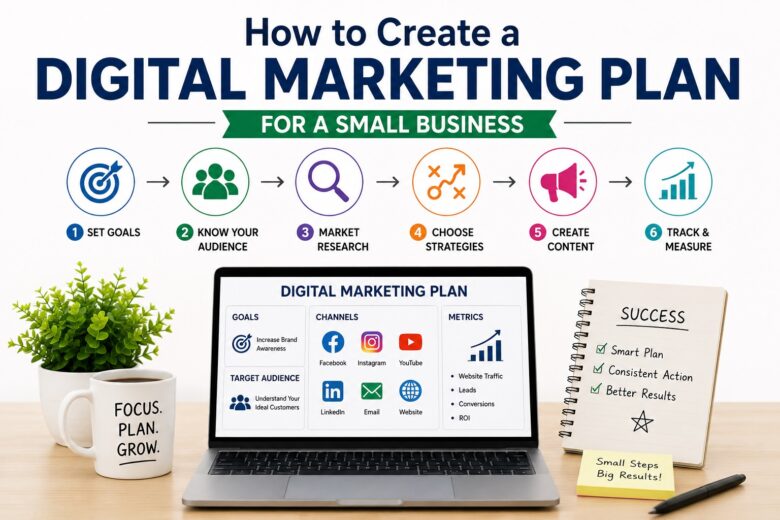
Running a small business without creating a digital marketing plan is like driving to a new destination without a map. You may eventually reach your goal, but you’ll likely waste time, money, and energy along the way. A well-planned digital marketing strategy helps you attract the right customers, increase brand awareness, generate quality leads, and grow your revenue consistently. Whether you’re launching a new business or improving your existing online presence, creating a structured marketing plan gives you a clear direction. Instead of trying every marketing trend, you focus on the strategies that deliver measurable results. This guide explains how to create an effective digital marketing plan for a small business in simple, practical steps.
What Is a Digital Marketing Plan?
A digital marketing plan is a roadmap that outlines how your business will achieve its marketing objectives using online channels. It identifies your target audience, marketing goals, content strategy, advertising methods, and key performance indicators.
Rather than randomly posting on social media or spending money on ads without a strategy, a digital marketing plan ensures every marketing activity supports your business objectives. It also helps you allocate your budget wisely and measure whether your efforts are generating a return on investment.
Why Every Small Business Needs to create digital marketing plan
Small businesses often have limited budgets compared to large corporations. Every dollar spent on marketing needs to deliver results. A digital marketing plan reduces guesswork by helping you prioritize the channels that bring the highest return.
It also improves consistency. Customers are more likely to trust businesses that maintain regular communication through blogs, social media, emails, and search engine optimization (SEO). Consistent branding and messaging strengthen customer relationships and increase long-term loyalty.
Key Benefits to create Digital Marketing Planning
Some of the biggest advantages include:
| Benefit | Impact |
| Better budgeting | Prevents unnecessary spending |
| Clear business goals | Keeps marketing focused |
| Higher ROI | Improves marketing efficiency |
| Better customer targeting | Better customer targeting |
| Easier performance tracking | Enables continuous improvement |
Before selecting marketing channels, identify what you want to achieve. Every marketing activity should contribute to a measurable business objective.
Examples include:
- Increase website traffic by 30%
- Generate 100 qualified leads monthly
- Grow online sales by 20%
- Increase email subscribers
- Improve customer retention
- Set SMART Marketing Objectives
Your goals should be SMART:
- Specific
- Measurable
- Achievable
- Relevant
- Time-bound
Instead of saying, “I want more customers,” define a measurable goal such as, “Increase online inquiries by 25% within six months.”
Align Marketing with Business Growth
Marketing should support your broader business objectives. If your primary goal is increasing online sales, prioritize SEO, paid advertising, and conversion optimization. If you want stronger customer relationships, invest in email marketing and content creation.
Understand Your Target Audience
Knowing your audience is one of the most important parts of digital marketing. You cannot create effective campaigns if you don’t understand who your customers are.
Research information such as:
- Age
- Gender
- Income
- Interests
- Buying habits
- Online behavior
- Common challenges
- Create Buyer Personas
A buyer persona is a detailed profile of your ideal customer. Include demographic information, purchasing motivations, pain points, and preferred communication channels.
For example, a local clothing boutique might target young professionals aged 22–35 who frequently shop through Instagram and prefer affordable fashion.
Research Customer Behavior
Use website analytics, customer surveys, social media insights, and online reviews to understand what your audience wants. The better you understand customer behavior, the easier it becomes to create marketing campaigns that convert.
Analyze Your Competitors
Competitor analysis helps identify opportunities your business can use to gain a competitive advantage.
Study competitors by evaluating:
- Website quality
- SEO performance
- Social media activity
- Content strategy
- Customer reviews
- Advertising campaigns
- Identify Their Strengths and Weaknesses
Ask questions like:
Which keywords are they ranking for?
What type of content gets the most engagement?
Which social media platforms perform best?
Where are customers expressing dissatisfaction?
Learning from competitors helps you improve your own marketing strategy.
Use Competitor Research Tools
Popular competitor research tools include:
- Google Search
- Google Trends
- Google Analytics
- Google Search Console
- Ahrefs
- SEMrush
- Ubersuggest
These tools provide valuable insights into keywords, backlinks, traffic sources, and content opportunities.
Choose the Right Digital Marketing Channels
Not every marketing channel works equally well for every business. Focus on platforms where your audience spends the most time.
SEO and Content Marketing
Search Engine Optimization (SEO) helps your website rank higher on Google. Combine SEO with high-quality blog content to attract organic visitors.
Optimize your content using:
- Keyword research
- Internal linking
- Fast website speed
- Mobile-friendly design
- High-quality content
Publishing valuable articles regularly builds trust while improving search visibility.
Social Media Marketing
Social media helps businesses build relationships with customers and increase brand awareness.
Popular platforms include:
- TikTok
Choose platforms based on your audience rather than trying to be active everywhere.
Email Marketing
Email marketing remains one of the highest-return digital marketing channels. Build an email list by offering useful content, discounts, or downloadable resources.
Send newsletters that include:
- Helpful tips
- Product updates
- Promotions
- Customer success stories
Personalized emails generally perform better than generic mass emails.
Paid Advertising
Paid advertising delivers faster results than SEO.
Popular options include:
- Google Ads
- Facebook Ads
- Instagram Ads
- YouTube Ads
- LinkedIn Ads
Start with a small budget, monitor performance, and increase spending only on campaigns producing positive results.
Create a Content Strategy
Content is the foundation of successful digital marketing. Every blog post, social media update, video, or email should educate, entertain, or solve customer problems.
Plan different content formats such as:
- Blog articles
- Videos
- Infographics
- Case studies
- Customer testimonials
- Email newsletters
- Build a Content Calendar
A content calendar keeps your marketing organized.
Include:
- Publishing dates
- Target keywords
- Content formats
- Distribution channels
- Responsible team members
Planning content in advance improves consistency and reduces last-minute stress.
Track Performance and Optimize
Marketing success depends on continuous improvement.
Monitor important metrics like:
- Website traffic
- Conversion rate
- Cost per lead
- Bounce rate
- Email open rate
- Click-through rate
- Return on investment (ROI)
- Measure Key Performance Indicators (KPIs)
Use tools such as Google Analytics and Google Search Console to monitor your progress.
Review performance every month. Identify campaigns generating the best results and improve or discontinue underperforming strategies. Digital marketing is an ongoing process, and regular optimization ensures long-term success.
Conclusion
Creating a digital marketing plan for a small business doesn’t have to be complicated. Start by defining clear goals, understanding your audience, researching competitors, selecting the right marketing channels, and developing a consistent content strategy. Measure your results regularly and adjust your campaigns based on real data. With a well-structured plan, your business can build a stronger online presence, attract more qualified customers, and achieve sustainable growth over time.
Frequently Asked Questions to create appropriate digital marketing plan
The first step is defining clear business and marketing goals. Knowing what you want to achieve helps guide every other marketing decision.
There is no single best channel. SEO, content marketing, social media, email marketing, and paid advertising all have value depending on your audience and objectives.
Review your marketing plan at least every quarter and make adjustments based on performance data, market trends, and business goals.
Yes. SEO helps improve search engine visibility, increases organic traffic, and attracts customers actively searching for your products or services.
Track KPIs such as website traffic, conversion rate, lead generation, email engagement, customer acquisition cost, and return on investment (ROI).