


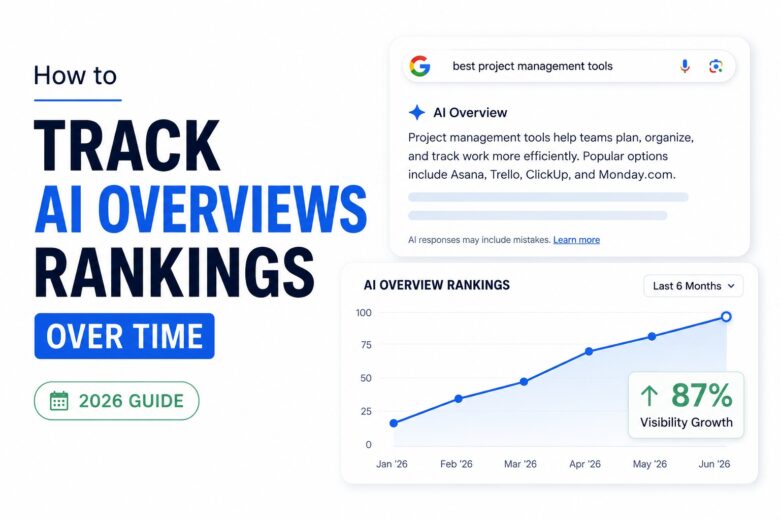
Google Search has changed significantly with the introduction of AI Overviews. Instead of showing only the traditional blue links, Google now displays AI-generated summaries at the top of many search results. These summaries quickly answer users’ questions by combining information from trusted websites. As a result, this helps people find the information they need faster without opening multiple pages. While this creates a better search experience for users, it also changes how SEO works. Learning how to track AI Overviews rankings over time has become an essential part of modern SEO, as it helps website owners measure their visibility in Google’s AI-powered search results.
However, ranking high in Google’s search results is no longer enough. To boost visibility and traffic, your content should also appear in Google’s AI Overviews. Tracking your AI Overview performance helps you understand how often your content is featured and how you compare with competitors. Before tracking AI Overviews, it’shelpful to understand how search engines work in 2026 and how AI-powered search determines which content appears in search results.
For example, you can also compare your results with those of your competitors to identify what needs improvement. By tracking your AI rankings consistently, you can improve your content, increase your visibility, and achieve better results in Google Search.
What Are Google AI Overviews?
Google AI Overviews show short, AI-generated summaries that appear at the top of some Google search results. They give quick answers by using information from trusted websites. Users can read the summary to get a fast answer or click the links to learn more from the original websites. If you’re new to AI-powered search, you may also want to learn the differences between SEO, GEO, AEO, and PPC.
These summaries differ from featured snippets because they use information from multiple websites rather than just one. This means getting a high ranking on Google is no longer enough. Your content should also be helpful, clear, and trustworthy to increase its chances of appearing in AI Overviews. Featuring your content allows more people to see your website, trust your brand, and visit your pages.
Why Tracking AI Overviews Matters
Traditional SEO reports focus mainly on keyword rankings, impressions, and clicks. However, these metrics do not show whether your content appears in AI Overviews. A page may rank first organically but receive fewer clicks if Google’s AI answers the question before users scroll to the search results.
Tracking AI Overviews helps you measure your true visibility. It helps you identify frequently cited content, monitor changes after content updates, and compare your performance with competitors. Over time, this information helps you make smarter SEO decisions based on real data instead of assumptions.
Key Metrics to Monitor
When tracking AI Overviews, focus on several key metrics instead of relying on rankings alone.
- AI Citation Rate: Measures how often AI Overviews reference your website.
- AI Share of Voice: Measures your brand’s visibility compared to competitors.
- Organic Rankings: Tracks your position in traditional Google search results.
- Click-Through Rate (CTR): Measures whether AI Overviews affect user clicks.
- Traffic Trends: Helps determine whether AI visibility increases or decreases website traffic.
By combining these metrics, you can better understand how your content performs in both traditional and AI-powered search results.
Best Tools to Track AI Overviews
Many SEO tools can help you track your AI Overview rankings. Choose a tool based on your budget and SEO needs. These tools show if your content appears in AI Overviews and help you track your website’s performance.
| Tool | Best For | What It Does |
| Ahrefs | SEO experts | Finds AI mentions, keywords, and competitors |
| Semrush | Businesses | Checks AI results and keyword rankings |
| SE Ranking | Small businesses | Tracks keyword rankings at a low cost |
| AirOps | AI SEO | Shows AI mentions and Share of Voice |
These tools make it easier to track your AI Overview performance over time. They help you monitor ranking changes, analyze competitors, discover new keyword opportunities, and identify ways to improve your content in Google’s AI Overviews. Most tools also provide valuable insights into how often your website appears in AI Overviews and which pages perform best. By using the right tool consistently, you can make smarter SEO decisions, improve your content strategy, increase your online visibility, and boost your chances of appearing more frequently in Google’s AI Overviews.
.
Best Practices for Improving AI Overview Rankings
Tracking your rankings is a good start, but your main goal should be to get your content featured in Google’s AI Overviews. Write helpful content that gives clear and direct answers to users’ questions. Use simple words, clear headings, and short paragraphs so your article is easy to read and understand.
Keep your content up to date by checking it regularly. Add new information, remove outdated details, and improve your article whenever needed. Write more articles on related topics and connect them with internal links. This helps Google understand your website better and can improve your chances of appearing in AI Overviews. Follow Google Search Essentials and create helpful, people-first content that demonstrates expertise and trust.
Common Mistakes to Avoid
Many website owners still focus only on traditional keyword rankings and ignore AI visibility. This can lead to missed opportunities because a page may rank well organically but never appear in AI Overviews. Another common mistake is publishing thin content that only targets keywords without providing real value. Google’s AI is designed to identify helpful, comprehensive, and reliable information.
Conclusion
Google AI Overviews have changed the way people use Google Search. Today, getting a high ranking in search results is important, but it is not enough. Your content should also appear in AI Overviews to reach more people and increase your website’s visibility.
Tracking AI Overviews rankings over time helps you see how well your content is performing. It shows how often your pages are mentioned in AI Overviews and how your website compares with other competitors. This information helps you find what is working and what needs to be improved.
You can use tools like Ahrefs, Semrush, SE Ranking, and AirOps to track your AI visibility. Keep your content updated, write helpful articles, and focus on answering users’ questions clearly. By doing this, you can improve your chances of appearing in Google’s AI Overviews and grow your website over time. To stay informed about the latest search updates and best practices, refer to the official Google Search documentation.
Frequently Asked Questions (FAQs)
Google AI Overviews are AI-generated summaries that appear at the top of search results, combining information from multiple trusted websites to answer users’ questions.
Tracking AI Overviews helps you measure your visibility in AI-powered search, understand how often your content is cited, and identify opportunities to improve your SEO strategy.
3. Which tools can track AI Overviews?
Popular tools include Ahrefs, Semrush, SE Ranking, and AirOps, all of which offer AI visibility and keyword tracking features.
Weekly or monthly monitoring is recommended because AI-generated search results can change frequently. Long-term trends provide more valuable insights than daily fluctuations.
Create helpful, well-structured, and up-to-date content, answer user questions clearly, build topical authority, and regularly update your articles with accurate information.