

How to Grow Your eCommerce Store Visibility from Zero to First Page
In today’s competitive digital marketplace, simply launching an online store is not enough. Thousands of eCommerce websites compete for attention, and without a solid SEO strategy, your products may never reach the right audience. If you are starting from zero and aiming to rank on the first page of search results, you need a structured, consistent, and realistic approach.
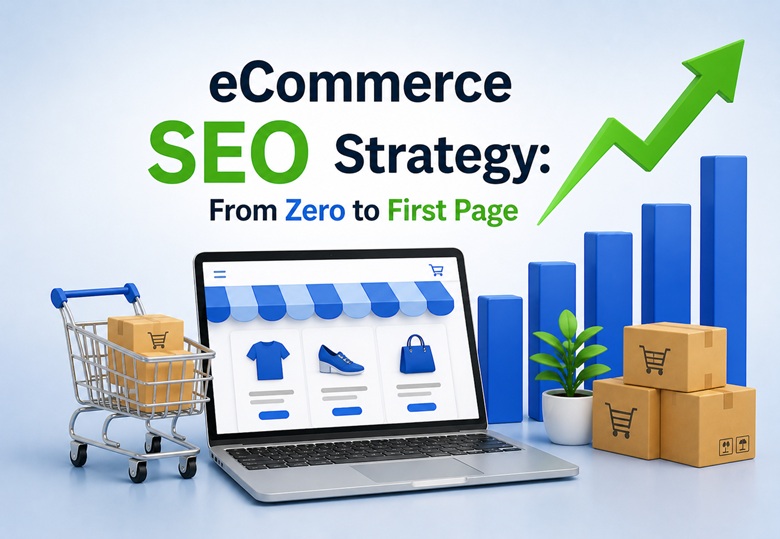
This guide walks you through a practical eCommerce SEO strategy: From Zero to First Page.
Understanding How eCommerce SEO Works
eCommerce SEO is the process of optimizing your online store so that search engines can easily find, understand, and rank your pages. Unlike blogs, eCommerce sites focus heavily on product and category pages, which require a slightly different approach.
Search Engines Rank Based On:
- Relevance (how well your content matches a search query)
- Authority (how trustworthy your site appears)
- User experience (how visitors interact with your site)
Keyword Research: The Foundation of SEO
Everything in SEO begins with keywords. You need to understand what your potential customers are searching for.
Focus on:
- Commercial keywords (e.g., “buy wireless earbuds”)
- Long-tail keywords (e.g., “best wireless earbuds under $50”)
- Product-specific keywords
Use Tools Like:
Look For:
- Search volume
- Competition level
- User intent
Target keywords that balance decent search volume with low to medium competition—especially when you’re starting out.
Optimize Your Site Structure
A clean and simple website structure helps both users and search engines.
Best Practices:
- Keep your navigation simple
- Use clear categories and subcategories
- Ensure every product is accessible within 3 clicks
Example Structure:
Home → Category → Subcategory → Product
This structure improves crawlability and enhances user experience.
On-Page SEO for Product and Category Pages
Each page on your site should be optimized individually.
Key Elements:
- Title Tags: Include your main keyword naturally
- Meta Descriptions: Make them engaging to improve click-through rate
- URL Structure: Keep it short and keyword-rich
- Headings (H1, H2): Organize your content clearly
- Product Descriptions: Avoid copying manufacturer descriptions—write unique content
Pro Tip:
Add FAQs on product pages. This helps target long-tail keywords and improves visibility.
Create High-Quality Content
Content is what drives organic traffic.
Content Ideas:
- Buying guides
- Product comparisons
- “Best of” lists
- How-to articles
Examples:
- “How to Choose the Right Skincare Products for Oily Skin.”
- “Top 10 Summer Gadgets You Should Try.”
This builds authority and attracts users at different stages of the buying journey.
Improve Technical SEO
Even great content won’t rank if your site has technical issues.
Focus On:
- Site speed (fast-loading pages rank better)
- Mobile optimization (most users are mobile)
- Secure connection (HTTPS)
- Fix broken links
- Use XML sitemap
Helpful Tools:
- Google Search Console
- PageSpeed Insights
Build Backlinks for Authority
Backlinks are a major ranking factor. They signal trust and authority.
Ways to Build Backlinks:
- Guest posting on relevant blogs
- Collaborating with influencers
- Listing your store in directories
- Creating shareable content (guides, infographics)
Focus on quality over quantity. A few strong backlinks are better than many weak ones.
Optimize for User Experience (UX)
Google pays attention to how users interact with your website.
Improve:
- Page load speed
- Easy navigation
- Clean design
- Clear call-to-action (CTA)
If users stay longer and engage more, your rankings improve over time.
Use Schema Markup
Schema helps search engines understand your content better and can improve your appearance in search results.
Use for eCommerce:
- Product schema
- Review schema
- Price and availability schema
This can lead to rich snippets, which increase click-through rates.
Track, Analyze, and Improve
SEO is not a one-time task. You need to monitor performance and adjust your strategy.
Track:
- Keyword rankings
- Organic traffic
- Conversion rates
- Bounce rates
Use Tools:
- Google Analytics
- Google Search Console
Final Thoughts
Ranking on the first page does not happen overnight. It requires patience, consistency, and continuous improvement. Start with strong fundamentals—keyword research, on-page optimization, and technical SEO—then gradually build authority through content and backlinks.
If you stay consistent and focus on providing real value to your users, your eCommerce store can move from zero to first page rankings.