

Digital marketing has transformed the way businesses connect with customers. From small startups to multinational corporations, organizations now rely on digital channels to build brand awareness, generate leads, and increase sales. Each channel serves a unique purpose, and combining multiple strategies often delivers the best results.
What is Digital Marketing?
Digital marketing means promoting a business, product, or service using the internet. Instead of advertising on TV, newspapers, or radio, businesses use online platforms like Google, Facebook, Instagram, YouTube, websites, emails, and mobile apps to reach customers.
Today, most people spend a lot of time online. They search for information, watch videos, shop online, and use social media every day. This is why digital marketing has become one of the most important ways for businesses to grow.
The biggest advantage of digital marketing is that businesses can easily measure their results. They can see how many people visit their website, click on an advertisement, or buy a product. This helps them improve their marketing and spend money more effectively.
Why is Digital Marketing Important?
Digital marketing helps businesses reach more people and find customers who are interested in their products or services.
It also allows businesses to:
- Increase brand awareness.
- Build trust with customers.
- Improve sales.
- Communicate directly with customers.
- Measure the success of every campaign.
Because it is affordable and effective, businesses of all sizes use digital marketing today.
1. Search Engine Optimization (SEO)
SEO (Search Engine Optimization) helps a website appear higher in Google search results.
For example, if someone searches “best coffee shop near me,” Google shows many websites. Most people choose one of the first results they see. SEO helps businesses appear near the top of those search results.
To improve SEO, businesses:
- Write useful content.
- Use the right keywords.
- Make their website fast.
- Make the website easy to use.
SEO takes time to show results, but it can bring free visitors to a website for a long time.
Simple idea: SEO helps people find your business on Google.
2. Content Marketing
Content marketing means creating useful information that helps people.
Instead of asking customers to buy immediately, businesses first answer their questions or solve their problems. This helps customers trust the business.
Content marketing includes:
- Blog articles
- Videos
- Guides
- E-books
- Podcasts
- Infographics
For example, a company that sells cameras may write an article called “How to Choose the Best Camera for Beginners.” After reading the article, people are more likely to buy from that company because they trust its advice.
Simple idea: Content marketing helps people trust your business.
3. Social Media Marketing
Social media marketing means promoting a business on platforms like Facebook, Instagram, TikTok, LinkedIn, YouTube, and X (Twitter).
Businesses share photos, videos, updates, and special offers to connect with customers.
Customers can like posts, leave comments, ask questions, and share content with others. This helps businesses build strong relationships with their audience.
Social media also increases brand awareness because more people see and share the business’s content.
Simple idea: Social media marketing helps businesses connect with customers.
4. Pay-Per-Click (PPC) Advertising
PPC stands for Pay-Per-Click.
It is a type of online advertising where businesses pay only when someone clicks on their advertisement.
These ads appear on Google, Facebook, LinkedIn, and other online platforms.
Unlike SEO, PPC gives fast results because advertisements can appear immediately after a campaign starts.
Businesses often use PPC when they want quick website traffic, more sales, or to promote a new product.
Simple idea: PPC helps businesses get visitors quickly through paid ads.
5. Email Marketing
Email marketing means sending emails to customers who are interested in a business.
Businesses use email to:
- Share news.
- Offer discounts.
- Introduce new products.
- Send newsletters.
- Remind customers about unfinished purchases.
Because customers have already signed up to receive emails, they are more likely to read them.
Email marketing helps businesses stay connected with customers and encourage repeat purchases.
Simple idea: Email marketing helps businesses stay in touch with customers.
6. Affiliate Marketing
Affiliate marketing allows other people to promote a company’s products.
These people are called affiliates.
Affiliates receive a special link. If someone buys through that link, the affiliate earns a commission.
This system benefits everyone:
- Businesses get more customers.
- Affiliates earn money.
- Customers discover useful products.
Simple idea: Affiliate marketing lets other people sell your products.
7. Influencer Marketing
Influencer marketing involves working with people who have many followers on social media.
These influencers recommend products to their audience.
Since many people trust influencers, their recommendations often encourage followers to try new products.
Many businesses now work with both famous influencers and smaller creators who have loyal followers.
Simple idea: Influencer marketing uses trusted people to recommend products.
8. Video Marketing
Video marketing uses videos to promote products or services.
Businesses create videos to:
- Explain products.
- Show how products work.
- Teach customers.
- Share customer reviews.
- Tell their brand story.
Videos are popular because they are easy to watch and understand.
Many businesses share videos on YouTube, TikTok, Instagram Reels, and Facebook.
Simple idea: Video marketing explains products using videos.
9. Mobile Marketing
Most people use smartphones every day.
Mobile marketing focuses on reaching customers through their phones.
Examples include:
- SMS messages.
- Mobile apps.
- Push notifications.
- Mobile-friendly websites.
Since people carry their phones almost everywhere, mobile marketing helps businesses reach customers at any time.
Simple idea: Mobile marketing reaches people on their smartphones.
10. Marketing Automation
Marketing automation uses software to perform marketing tasks automatically.
Instead of doing everything manually, businesses use automation to:
- Send emails.
- Schedule social media posts.
- Track customer activity.
- Manage customer information.
- Create reports.
Automation saves time and helps businesses work more efficiently.
Simple idea: Marketing automation lets software do repetitive marketing work automatically.
Which Type Should You Choose?
There is no single type of digital marketing that is best for every business.
Each type has a different purpose.
- Use SEO if you want people to find your website on Google.
- Use Content Marketing if you want to build trust.
- Use Social Media Marketing if you want to connect with customers.
- Use PPC Advertising if you want quick results.
- Use Email Marketing if you want to keep customers interested.
- Use Affiliate Marketing if you want others to promote your products.
- Use Influencer Marketing if you want to reach a larger audience.
- Use Video Marketing if you want to explain products visually.
- Use Mobile Marketing if you want to reach smartphone users.
- Use Marketing Automation if you want to save time.
Most successful businesses use several types together because each one helps in a different way.
Conclusion
According to Gartner’s 2025 CMO Spend Survey, digital channels account for 61.1% of total marketing spend, highlighting how online marketing has become the dominant approach for modern businesses. Digital marketing is simply using the internet to promote a business, product, or service.
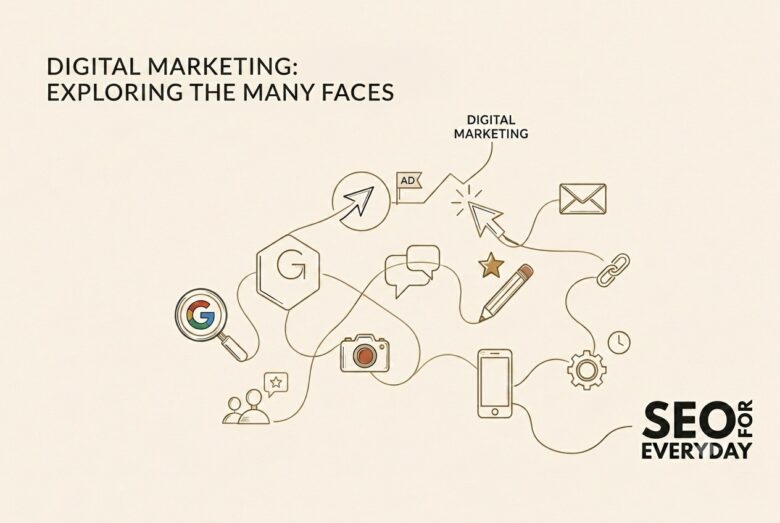
The main types of digital marketing are SEO, Content Marketing, Social Media Marketing, PPC Advertising, Email Marketing, Affiliate Marketing, Influencer Marketing, Video Marketing, Mobile Marketing, and Marketing Automation.
Each type has its own purpose, but together they help businesses reach more people, build trust, and increase sales.
The easiest way to remember digital marketing is:
- SEO helps people find your business.
- Content Marketing helps people trust your business.
- Social Media helps you connect with customers.
- PPC helps you get visitors quickly.
- Email Marketing helps you keep customers.
- Affiliate Marketing lets others promote your products.
- Influencer Marketing uses trusted creators to recommend products.
- Video Marketing explains products through videos.
- Mobile Marketing reaches customers on smartphones.
- Marketing Automation saves time by doing marketing tasks automatically.
Together, these methods help businesses attract customers, build relationships, and grow successfully in the digital world.
Frequently Asked Questions
SEO and content marketing are excellent starting points because they build long-term visibility while teaching fundamental marketing principles.
Neither is universally better. SEO offers sustainable organic traffic, while PPC delivers immediate visibility. Many businesses benefit from using both together.
Email marketing reaches interested customers directly, supports personalization, and consistently delivers strong returns on investment.
Social media is essential for building brand awareness, engaging customers, and driving website traffic through interactive content.
The future lies in AI-powered personalization, automation, privacy-focused marketing, short-form video, and integrated omnichannel customer experiences.