

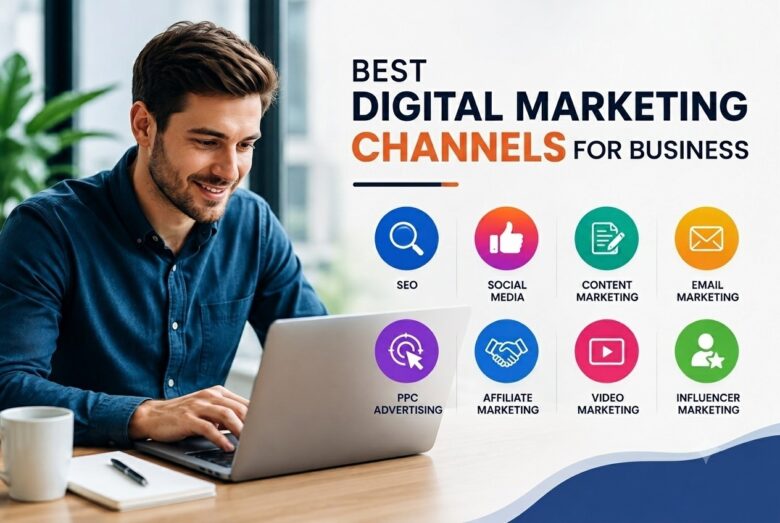
In today’s competitive online marketplace, choosing the best digital marketing channels for business is essential for reaching the right audience, building brand awareness, generating leads, and increasing sales. Businesses have access to many digital marketing channels, including search engines, social media, email marketing, content marketing, paid advertising, and affiliate marketing. However, not every channel is suitable for every business.
The best approach is to understand your target audience, business goals, budget, and industry before selecting your marketing channels. A well-planned digital marketing strategy can help you attract potential customers, build long-term relationships, and grow your business online.
What Are Digital Marketing Channels?
Digital marketing channels are online platforms and methods businesses use to communicate with potential customers and promote their products or services. These channels allow businesses to reach people at different stages of the customer journey.
For example, a business may use SEO to attract people searching on Google, social media to build brand awareness, and email marketing to maintain relationships with existing customers.
Some of the most popular digital marketing channels include:
- Search Engine Optimization (SEO)
- Social Media Marketing
- Content Marketing
- Email Marketing
- Pay-Per-Click Advertising (PPC)
- Affiliate Marketing
- Influencer Marketing
- Video Marketing
Choosing the right combination of these channels can make your marketing efforts more effective.
Search Engine Optimization (SEO)
SEO is one of the most valuable digital marketing channels for businesses that want to generate consistent organic traffic from search engines. With SEO, businesses optimize their websites and content so that they can appear higher in search engine results.
For example, if you sell fitness products, you could create content targeting keywords such as “best home workout equipment” or “fitness equipment for beginners.”
Why Choose SEO?
SEO can help businesses:
- Increase organic website traffic
- Improve online visibility
- Generate potential leads
- Build brand credibility
- Reduce dependence on paid advertising
SEO usually takes time to produce significant results, but a strong SEO strategy can provide long-term benefits.
Social Media Marketing
Social media marketing is another powerful digital marketing channel. Platforms such as Facebook, Instagram, TikTok, LinkedIn, and YouTube allow businesses to connect directly with their target audience.
Social media is particularly useful for businesses that depend on visual content, community engagement, and brand awareness.
Benefits of Social Media Marketing
Businesses can use social media to:
- Promote products and services
- Share educational content
- Build a community
- Communicate with customers
- Increase website traffic
- Generate leads and sales
The key is to choose platforms where your target customers are actually active instead of trying to maintain a presence on every platform.
Content Marketing
Content marketing focuses on creating useful, relevant, and valuable content for your target audience. This can include blog posts, guides, tutorials, case studies, infographics, videos, and other educational materials.
For example, a digital marketing agency could publish articles about SEO, Google Ads, social media marketing, and website optimization.
Why Is Content Marketing Important?
High-quality content can help your business:
- Attract potential customers
- Answer customer questions
- Build authority
- Support SEO efforts
- Increase trust
- Encourage customers to make purchasing decisions
Content marketing works particularly well when combined with SEO and social media marketing.
Email Marketing
Email marketing is an effective channel for building relationships with customers and encouraging repeat purchases. Businesses can collect email addresses from website visitors and send newsletters, promotional offers, product updates, and educational content.
Unlike social media, where algorithms can affect how many people see your content, email gives businesses a more direct way to communicate with subscribers.
How Businesses Can Use Email Marketing
You can use email marketing for:
- Welcome emails
- Promotional campaigns
- Product recommendations
- Newsletters
- Abandoned cart reminders
- Customer retention campaigns
Email marketing can be especially valuable for ecommerce businesses and companies with repeat customers.
Pay-Per-Click Advertising (PPC)
Pay-per-click advertising allows businesses to pay for targeted advertisements on search engines and other online platforms. Google Ads is one of the most popular examples of PPC advertising.
PPC can help businesses reach potential customers who are actively searching for specific products or services.
Advantages of PPC Advertising
The main benefits of PPC include:
- Fast traffic generation
- Precise audience targeting
- Budget control
- Measurable results
- Ability to test different advertisements
However, PPC requires careful keyword research, ad optimization, and budget management. Poorly managed campaigns can become expensive without producing enough conversions.
Affiliate Marketing
Affiliate marketing is a performance-based digital marketing channel. Businesses work with affiliates who promote their products or services and receive a commission when they generate a successful sale or another desired action.
Affiliate marketing can be useful for businesses that want to expand their reach without paying large upfront advertising costs.
For example, an online store can partner with bloggers, content creators, or website owners who recommend its products to their audiences.
Influencer Marketing
Influencer marketing involves collaborating with people who have an established audience on platforms such as Instagram, TikTok, YouTube, or other social networks.
Influencers can introduce your product or service to their followers through reviews, demonstrations, tutorials, or sponsored content.
This channel can work particularly well for fashion, beauty, food, lifestyle, technology, and consumer product businesses.
However, businesses should choose influencers based on audience relevance and engagement rather than follower count alone.
Video Marketing
Video marketing has become an important part of digital marketing because many people prefer consuming information through video. Businesses can create product demonstrations, tutorials, educational videos, customer testimonials, and short-form videos.
Platforms such as YouTube, TikTok, Instagram, and Facebook provide opportunities to reach different types of audiences.
Video content can also support SEO and social media marketing when it is properly optimized and distributed.
How to Choose the Best Digital Marketing Channels for Your Business
Choosing the right marketing channels requires more than simply following the latest trend. You should consider several factors before investing your time and money.
Understand Your Target Audience
First, identify who your ideal customers are. Consider their age, location, interests, problems, purchasing behavior, and preferred online platforms.
If your audience spends a lot of time watching videos, video marketing may be valuable. If they frequently search Google for solutions, SEO and PPC may be more appropriate.
Define Your Marketing Goals
Your goals should influence your channel selection. If your goal is long-term organic traffic, SEO may be a strong option. If you need immediate website traffic, PPC could be more suitable.
For brand awareness, social media and influencer marketing may be effective, while email marketing can be useful for customer retention.
Consider Your Budget
Every business has a different marketing budget. SEO and content marketing may require more time, while PPC requires direct advertising spending.
Start with channels that match your available resources and gradually increase your investment when you identify profitable strategies.
Analyze Your Competitors
Competitor research can help you understand which channels are working in your industry. Look at their website content, social media activity, advertising strategies, and search visibility.
However, do not copy competitors blindly. Use competitor analysis to identify opportunities and develop a strategy that fits your own business.
Measure Your Results
Digital marketing should be measurable. Track important metrics such as website traffic, leads, conversion rate, customer acquisition cost, engagement, and return on investment.
If a channel consistently produces good results, consider increasing your investment. If another channel does not produce meaningful results, test a different strategy or reduce your spending.
Best Digital Marketing Channels by Business Goal
Different channels can be suitable for different objectives.
| Business Goal | Recommended Channels |
| Increase organic traffic | SEO, Content Marketing |
| Generate quick traffic | PPC, Social Media Ads |
| Build brand awareness | Social Media, Influencer Marketing |
| Generate leads | SEO, PPC, Content Marketing |
| Increase repeat purchases | Email Marketing |
| Build authority | Content Marketing, SEO |
| Promote visual products | Social Media, Video Marketing |
| Expand product reach | Affiliate Marketing, |
The best results often come from combining multiple channels instead of relying on only one.
Conclusion
Selecting the best digital marketing channels for business depends on your target audience, goals, budget, industry, and available resources. SEO, social media marketing, content marketing, email marketing, PPC, affiliate marketing, influencer marketing, and video marketing can all contribute to business growth when used correctly.
Instead of trying to use every channel at once, start with two or three channels that closely match your audience and objectives. Measure your performance, learn from the results, and continuously improve your strategy.
A successful digital marketing strategy is not about being everywhere.