

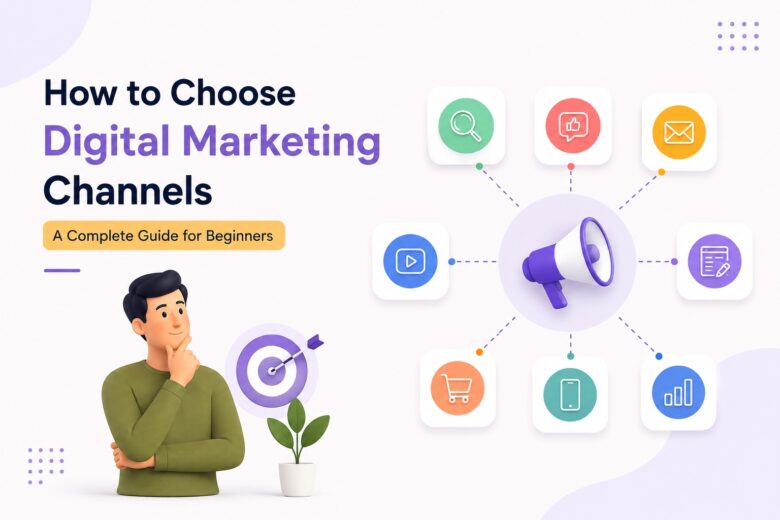
Choosing the right digital marketing channels is one of the most important decisions a business can make. No matter how great your product or service is, it will be difficult to succeed if you promote it on the wrong platforms. Every marketing channel has its own strengths, audience, and purpose. Understanding where your target customers spend their time and how they interact online can help you make smarter marketing decisions. In this guide, you’ll learn how to choose digital marketing channels that align with your business goals, target audience, and budget.
What Are Digital Marketing Channels?
Digital marketing channels are online platforms and methods that businesses use to connect with potential customers. These channels help promote products, generate leads, increase website traffic, and improve sales.
Some of the most popular digital marketing channels include:
- Search Engine Optimization (SEO)
- Pay-Per-Click (PPC) Advertising
- Social Media Marketing
- Email Marketing
- Content Marketing
- Video Marketing
- Influencer Marketing
- Affiliate Marketing
- SMS Marketing
Each channel plays a different role in the customer journey.
Why Choosing the Right Marketing Channel Matters
Selecting the right digital marketing channel helps you:
- Reach the right audience.
- Increase your return on investment (ROI).
- Generate quality leads.
- Improve brand awareness.
- Reduce unnecessary marketing expenses.
- Achieve business goals faster.
Instead of trying every platform, focusing on the channels that match your audience and objectives will deliver better results.
1. Define Your Business Goals
Before selecting any marketing channel, identify your primary objective.
Ask yourself:
- Do you want more website traffic?
- Are you trying to generate leads?
- Do you want to increase online sales?
- Is your goal to improve brand awareness?
- Are you looking to build customer loyalty?
For example:
- SEO works well for long-term organic traffic.
- Google Ads can generate immediate leads.
- Email marketing is excellent for customer retention.
- Social media helps increase brand visibility.
Your goals should guide your channel selection.
2. Understand Your Target Audience
Knowing your audience is essential.
Consider these questions:
- What is their age?
- Where do they live?
- What problems do they have?
- Which social media platforms do they use?
- What type of content do they prefer?
For example:
A B2B software company may perform better with LinkedIn and SEO, while a fashion brand might achieve better engagement on Instagram, TikTok, and Pinterest.
The better you understand your audience, the easier it becomes to choose the right marketing channels.
3. Evaluate Your Budget
Every marketing channel requires different levels of investment.
If you have a limited budget, focus on:
- SEO
- Content Marketing
- Organic Social Media
- Email Marketing
If you have a larger marketing budget, you can include:
- Google Ads
- Facebook Ads
- YouTube Ads
- Influencer Marketing
- Display Advertising
Choose channels that provide the best return based on your available resources.
4. Analyze Your Competitors
Competitor research can reveal valuable insights.
Look at:
- Which channels do they use?
- Their content strategy.
- Their advertising campaigns.
- Customer engagement.
- Search engine rankings.
This doesn’t mean copying competitors. Instead, learn what works in your industry and identify opportunities they may have missed.
5. Consider the Customer Journey
Different channels work better at different stages of the buying process.
Awareness Stage
The Awareness Stage is the first stage of the marketing funnel, where potential customers become aware that they have a problem, need, or desire—and discover your brand for the first time.
At this stage, people are not ready to buy. They are looking for information, learning about their problem, and exploring possible solutions.
Best channels:
- SEO
- Blog Content
- Social Media
- YouTube
- Display Ads
Consideration Stage
The Consideration Stage in a marketing channel refers to the phase of the customer journey where potential customers already know about your brand or product and are actively comparing it with other options before making a purchase decision.
At this stage, the goal is to build trust, educate prospects, and demonstrate why your solution is the best choice.
Best channels:
- Email Marketing
- Webinars
- Case Studies
- Product Videos
- Retargeting Ads
Decision Stage
The Decision Stage in a marketing channel is the point in the customer journey where a potential customer has already researched different options and is ready to choose a solution or make a purchase. At this stage, the goal is to remove any remaining doubts and encourage them to take action.
Best channels:
- Google Search Ads
- Customer Reviews
- Testimonials
- Landing Pages
- Promotional Emails
Using multiple channels throughout the customer journey often yields better results than relying on a single platform.
6. Measure Performance Regularly
Marketing decisions should always be based on data.
Track important metrics such as:
- Website traffic
- Conversion rate
- Click-through rate (CTR)
- Cost per lead (CPL)
- Return on ad spend (ROAS)
- Customer acquisition cost (CAC)
- Email open rate
- Engagement rate
Tools like Google Analytics, Google Search Console, Meta Business Suite, and advertising dashboards can help monitor your performance.
If a channel isn’t producing results, adjust your strategy instead of continuing to invest without analysis.
7. Focus on Integration Instead of One Digital Marketing Channel
Many successful businesses don’t rely on a single digital marketing channel.
Instead, they combine multiple strategies.
For example:
- SEO attracts organic visitors.
- Content Marketing educates potential customers.
- Social Media increases engagement.
- Email Marketing nurtures leads.
- PPC generates immediate conversions.
An integrated marketing approach creates a better customer experience and improves overall campaign performance.
Common Mistakes to Avoid to Choose Digital Marketing Channels
When choosing digital marketing channels, avoid these common mistakes:
- Trying every platform at once.
- Ignoring audience behavior.
- Choosing channels based on trends instead of strategy.
- Failing to track performance.
- Giving up too early before seeing results.
- Not creating quality content.
- Ignoring mobile users.
Avoiding these mistakes can save both time and marketing budget.
Best Digital Marketing Channels by Business Type
| Business Type | Recommended Channels |
| Local Business | Local SEO, Google Business Profile, Facebook |
| E-commerce Store | SEO, Google Ads, Instagram, Email Marketing |
| B2B Company | LinkedIn, SEO, Email Marketing, Content Marketing |
| SaaS Business | SEO, PPC, Webinars, Email Marketing |
| Personal Brand | YouTube, LinkedIn, Instagram, Blog |
Conclusion
Understanding how to choose digital marketing channels is essential for building a successful online marketing strategy. The best channel isn’t necessarily the most popular one—it’s the one that connects your business with the right audience at the right time.
Start by defining your business goals, understanding your audience, evaluating your budget, and analyzing competitors. Combine multiple marketing channels when appropriate, track performance consistently, and optimize your strategy based on real data.
With the right approach, your digital marketing efforts will become more focused, cost-effective, and capable of delivering long-term business growth.
Frequently Asked Questions to Choose Digital Marketing Channels
SEO and content marketing are excellent starting points because they generate long-term organic traffic. Social media marketing is also a great option for building brand awareness with minimal investment.
Yes. Most successful businesses use a combination of SEO, social media, email marketing, and paid advertising to reach customers at different stages of the buying journey.
Monitor key performance indicators, including traffic, conversions, engagement, and ROI. Compare results across channels and invest more in the ones that consistently deliver value.
Neither is universally better—they serve different purposes. SEO is ideal for long-term organic visibility, while social media excels at engagement, community building, and brand awareness. Many businesses benefit from using both together.
Review your performance at least once a month. Conduct a more detailed strategic review every quarter to identify trends, optimize campaigns, and adjust your channel mix in line with evolving business goals and customer behavior.