


Search engines are no longer just tools—they’re like digital guides helping us navigate the infinite web. Have you ever typed a question into Google and wondered how it magically gives you the exact answer in seconds? Well, that’s the magic of modern search engines in 2026. From showing you the best local pizza to helping you research AI technology, search engines connect billions of queries to the right content every single day. Let’s break it down step by step and see what’s really happening behind the scenes.
What is a Search Engine?
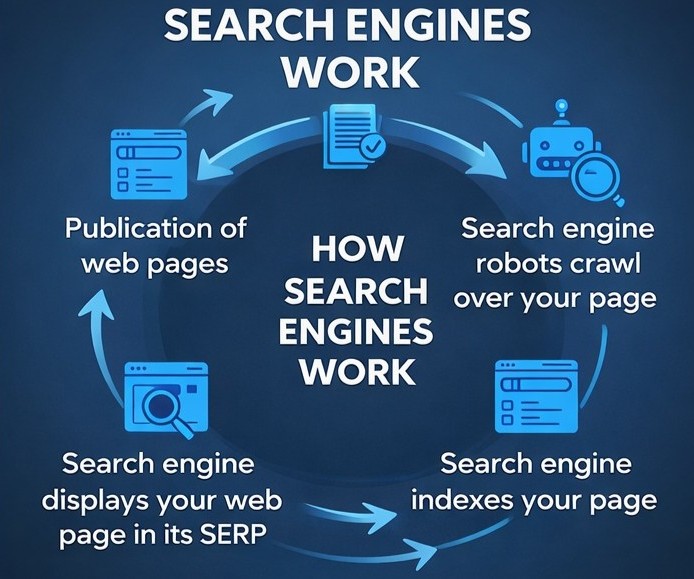
Think of a search engine as a huge digital librarian. Instead of flipping through books, it scans the entire internet. Google, Bing, and Baidu are some of the most popular examples. They crawl websites, index pages, and then rank them to show you the most relevant results. It’s kind of like having a personal assistant who knows everything about everything—except it works in milliseconds.
Why Search Engines Are Important in 2026
By 2026, search engines do more than just help you find things. They influence what we read, buy, and even how we learn new skills. Modern engines use AI, personalization, and semantic search to make sense of user intent. So, if you’re a content creator, understanding how they work is not just useful—it’s essential.
The Evolution of Search Engines
From Keyword-Based Search to AI-Driven Search
Remember when SEO meant cramming keywords into your post? That’s long gone. Today, AI helps engines understand the meaning behind your words, not just the words themselves. It’s like teaching someone a language instead of giving them a dictionary—they actually understand context.
Semantic Search and User Intent
Search engines now focus on why you’re searching, not just what you’re typing. For example, “best smartphone under $500” doesn’t just return phones—it considers price, reviews, and specs. Crazy, right?
The Rise of Voice and Visual Search
Voice search with assistants like Siri or Alexa is booming. Visual search, like using Google Lens to identify objects, is changing the game too. This means content needs to be more than text—it needs context, images, and structured data to show up.
How Search Engines Crawl the Web
What is Crawling?
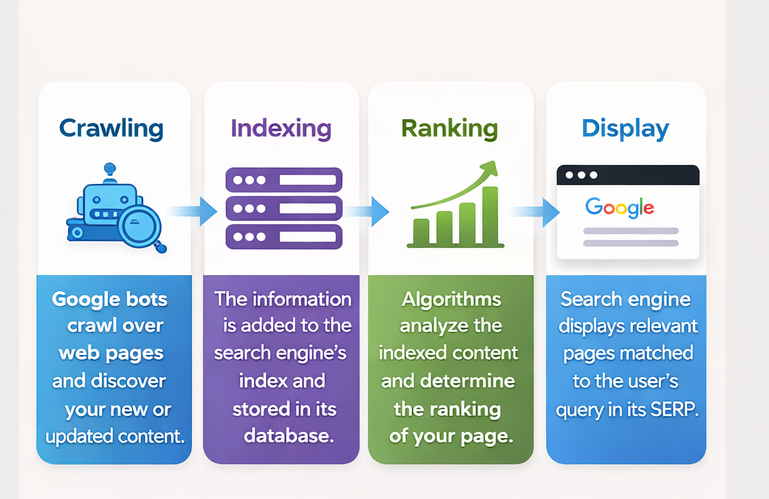
Crawling is like the search engine’s way of exploring the web. Bots follow links and gather information about every page they find. If a page isn’t discoverable, it’s like it doesn’t exist.
Search Engine Bots and AI Crawlers
These crawlers are smarter than ever. They can read text, images, videos, and even some code. And thanks to AI, they prioritize high-quality pages and filter out spam automatically.
Crawl Budget and Its Importance
Every site has a “crawl budget”—the number of pages bots will visit. Optimizing your site ensures important pages get indexed quickly. Trust me, this can make or break your SEO game.
Indexing in 2026
How Pages Are Indexed
Indexing is when the search engine stores a page in its database. Only indexed pages can appear in search results. Modern AI evaluates relevance, freshness, and even user satisfaction before adding a page.
Structured Data and Rich Snippets
Using schema markup is like giving the engine a cheat sheet. It tells Google exactly what your content is about, leading to rich snippets, FAQ boxes, and featured answers.
Mobile-First Indexing
With mobile traffic dominating, Google prioritizes mobile-friendly sites. A desktop-only site? Forget it—it won’t rank as well.
Ranking Algorithms Explained
Core Ranking Factors
Content quality, backlinks, page speed, mobile usability, engagement—all of these still matter. But in 2026, AI also predicts which content users will find most helpful.
E-E-A-T in 2026
Experience, Expertise, Authoritativeness, Trustworthiness—this is how Google decides if your content is credible. For example, a travel blog written by someone who actually visited the places ranks higher than one that copied info from Wikipedia.
AI and Machine Learning in Ranking
Algorithms now learn from user behavior—what people click, what they ignore, and even how long they stay on a page. It’s like a teacher grading homework in real time.
Search Engine Results Page (SERP) in 2026
Featured Snippets and Rich Results
Ever notice answers popping at the top of Google? Those are featured snippets. They grab attention, increase clicks, and make your content stand out.
Zero-Click Searches
Sometimes, users get answers without clicking any link. This can be frustrating for marketers, but optimizing for snippets still increases visibility.
Personalized and Localized Results
Search engines personalize results based on your location, past behavior, and device. Local SEO is key—your pizza shop should appear for nearby searches, not across the country.
User Behavior and Search Engines
Click-Through Rate (CTR) Impact
High CTR signals relevance. Titles and meta descriptions are your chance to grab attention—make them irresistible.
Bounce Rate vs. Dwell Time
Pages that keep users longer send positive signals. Quick exits? That hurts rankings.
User Engagement Signals
Comments, shares, and returning visitors all tell search engines: “This content matters.”
Technical SEO for Modern Search Engines
Website Speed and Core Web Vitals
Slow sites frustrate users and hurt rankings. Core Web Vitals measure speed, interactivity, and visual stability—everything Google cares about.
Mobile Optimization
Responsive design is non-negotiable. Pages must work flawlessly on all devices.
HTTPS and Secure Websites
Secure sites are trusted by users and favored by search engines. If you’re still on HTTP… upgrade now.
Content Optimization for 2026
Semantic SEO and LSI Keywords
Don’t just repeat your main keyword—use related terms naturally. This tells search engines your content covers the topic comprehensively.
Natural Language Processing (NLP) for Content
Write like a human talks. Search engines now understand conversational language, so informal and clear writing ranks better.
Multimedia Optimization
Images, videos, and audio should include alt text, transcripts, and metadata. It’s not just for accessibility—it boosts SEO.
The Role of AI in Search Engines
ChatGPT, Bard, and AI-Powered Search
AI chatbots now integrate directly into search engines, giving conversational answers.
Predictive Search and Auto-Suggestions
Engines predict queries based on past searches and trending topics. Optimizing for these can get you early traffic.
AI-Generated Content Quality Assessment
AI can rank content if it’s high-quality. Thin or repetitive content? Instantly filtered.
Future of SEO
Zero-Click and Direct Answers
The goal isn’t always clicks anymore. Visibility itself is the win. Optimize for snippets, knowledge panels, and direct answers.
Conversational Search and Chatbots
Search is becoming interactive. People want answers like a conversation, not a list of links.
Search Engine Market Trends 2026
Voice, video, AI, and personalization dominate SEO. Adapt quickly or risk falling behind.
Conclusion Search engines in 2026 are smarter, faster, and more human-aware than ever. Understanding crawling, indexing, ranking, and user behavior is essential. With proper SEO strategies, content creators can thrive, ensuring visibility, credibility, and engagement
They use AI, semantic search, and behavioral analysis to interpret context.
Yes. Core principles like quality content, structured data, and technical SEO are still crucial.
Very important—it helps content appear in rich snippets and knowledge panels.
Yes, if it is high-quality, original, and useful for users.