


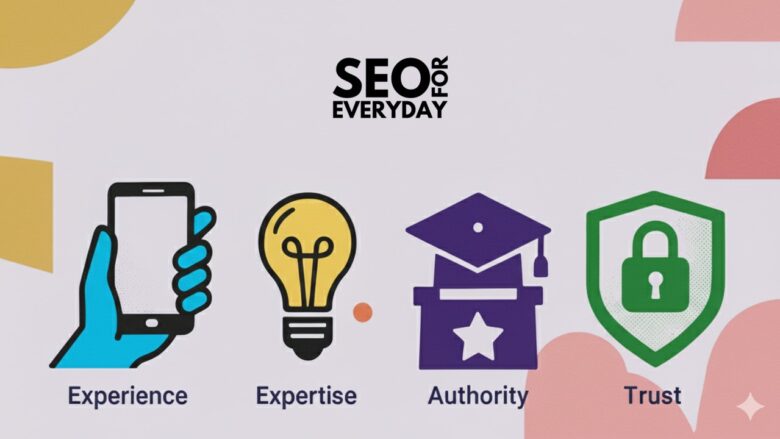
What is E-E-A-T? E-E-A-T stands for Experience, Expertise, Authoritativeness, and Trustworthiness. It’s a set of guidelines Google uses to assess content quality. Think of it as Google’s way of asking: “Can I trust this content, and does the creator actually know what they’re talking about?”
The Evolution from E-A-T to E-E-A-T
Introduced initially as E-A-T in 2014, Google added another “E” — Experience — in December 2022. This addition emphasized the importance of first-hand experience in evaluating content credibility. Now, it’s not just about what you know, but whether you’ve personally lived it.
Why E-E-A-T Matters in SEO
Impact on Google Rankings
E-E-A-T isn’t a direct ranking factor like page speed, but it’s deeply embedded in how Google ranks content. High-E-E-A-T pages tend to perform better, especially in competitive niches like health, finance, and legal.
How Google Evaluates Content with E-E-A-T
Google uses human Quality Raters to assess pages using E-E-A-T standards. These ratings help train Google’s algorithms to surface high-quality content better. So, improving your E-E-A-T indirectly boosts your SEO game.
Components of E-E-A-T Explained
Experience
Real-life Use or First-hand Experience
Experience refers to whether the content creator has personally used the product, lived through the event, or has hands-on familiarity with the topic. For example, a backpacking blog written by someone who actually trekked the Himalayas screams “experience.”
Expertise
Niche Expertise vs General Knowledge
Expertise is about depth of knowledge. A dermatologist writing about skincare has more expertise than a general blogger. Google values specific expertise over generalist advice, especially for YMYL content.
Authoritativeness
Signals That Build Authority
Authority comes from recognition by others. Are other trusted sites linking to your content? Is your name cited often in your niche? These are signals of authoritativeness.
Trustworthiness
Secure Sites, Transparency & Accuracy
Trust is the glue that holds the E-E-A-T framework together. Factors that improve trust include:
- SSL certificate (HTTPS)
- Transparent contact information
- Factually correct content
- Minimal ads or distractions
E-E-A-T and Your Website Content
Blogging with E-E-A-T in Mind
Add author bios, cite reputable sources, and link to original research. Show readers you know your stuff — and that you’ve lived it.
Product Pages and E-E-A-T
Include user reviews, video demonstrations, and real-life use cases. This enhances both experience and trust.
YMYL (Your Money or Your Life) Content and E-E-A-T
Topics that impact health, finance, or safety must show maximum E-E-A-T. Google holds these pages to very high standards.
Real-World Examples of Good E-E-A-T
Medical Websites
WebMD and Mayo Clinic feature content written or reviewed by licensed medical professionals, with clear author credentials.
Financial Blogs
NerdWallet does it well. They explain complex financial topics with expert authors and cite up-to-date data.
Tech Product Reviews
YouTube creators like MKBHD offer hands-on experience, building both authority and trust.
How to Improve Your E-E-A-T Score
Showcase Author Bios
Highlight qualifications, experience, and any awards or certifications your authors hold.
Cite Credible Sources
Link out to government websites, academic research, or well-known authorities in your niche.
Encourage User Reviews and Testimonials
First-hand experiences from users boost both expertise and trustworthiness.
Build Quality Backlinks
Earning links from reputable websites signals authority and trust.
Be Transparent with Contact & Company Info
Add a contact page, a privacy policy, and an “About Us” section. These small additions build enormous trust.
Common Mistakes that Hurt E-E-A-T
Thin Content
If your content lacks depth, insight, or usefulness, Google sees it as low-quality.
Fake Reviews or False Claims
Google is cracking down hard on manipulated trust signals. Keep it real.
Outdated or Incorrect Information
Update content regularly. Nothing screams “untrustworthy” like stale information.
The Role of Google’s Quality Raters
How Rater Guidelines Influence Algorithm Changes
While raters don’t directly impact rankings, their feedback trains Google’s AI models to favor content that aligns with E-E-A-T.
E-E-A-T in the Raters’ Handbook
Google’s 176-page Search Quality Evaluator Guidelines repeatedly stress E-E-A-T, especially for YMYL topics.
SEO Strategy with E-E-A-T in 2025 and Beyond
How to Future-Proof Your Site
Google is moving toward human-like evaluation. E-E-A-T helps your content stand out in an era of AI-generated fluff.
Aligning with Helpful Content Updates
Google’s recent updates prioritize helpful, people-first content — exactly what E-E-A-T encourages.
Tools and Resources to Boost E-E-A-T
Schema Markup
Use author schema, review schema, and organization schema to help Google understand your credibility.
Content Audit Tools
Tools like SurferSEO and Clearscope can help optimize your content for E-E-A-T elements.
Reputation Management Platforms
Monitor your brand mentions, reviews, and public perception with tools like Brand24 or Trustpilot.
E-E-A-T isn’t just an acronym — it’s the blueprint for building credible, valuable, and high-ranking content. Whether you’re a solo blogger or a large brand, integrating Experience, Expertise, Authoritativeness, and Trustworthiness into your content is key to SEO success in 2025 and beyond.
Focus on authenticity, transparency, and value — and Google will reward you for it.
Frequently Asked Questions
No, but it heavily influences how Google ranks content, especially in competitive niches.
Include personal stories, case studies, hands-on reviews, or first-person insights.
Experience is lived knowledge; expertise is learned or trained knowledge.
Yes! Author bios help establish credibility and authority in your niche.
It can, but only if fact-checked, human-reviewed, and supplemented with real insights or experience.